


Choosing a career can feel overwhelming. There are thousands of job titles, dozens of industries, and countless paths to explore. However, understanding how job classifications work can make the process much clearer. When you know how jobs are grouped and labeled, you can make smarter decisions about where to focus your time, energy, and education.
This article will walk you through what job classifications are, how they work, and how you can use them to plan a fulfilling career. Whether you are just starting out or thinking about a career change, this guide will help you move forward with confidence.
What Are Job Classifications?
Job classifications are systems used to group jobs based on similar duties, skills, and responsibilities. Governments, employers, and academic institutions use these systems to organize the labor market. They help everyone speak the same language when it comes to work.
One of the most well-known systems is the Standard Occupational Classification (SOC), used in the United States. It groups all jobs into 23 major categories, from management roles to service positions. Similarly, the International Standard Classification of Occupations (ISCO) is used globally to compare job data across countries.
These systems are not just for researchers. They also help job seekers understand where their skills fit, what similar roles might look like, and how much they could earn in a given field.
Why Job Classifications Matter for Your Career
Understanding job classifications gives you a roadmap. Instead of searching randomly for jobs online, you can look at broad categories first and then narrow your focus. This saves time and reduces confusion.
Additionally, job classifications are tied to salary data, education requirements, and growth projections. For example, the Bureau of Labor Statistics in the US publishes employment data organized by occupational codes. This data can tell you whether a particular field is growing, shrinking, or staying the same.
Therefore, if you take the time to study these classifications, you can make career decisions based on real information rather than guesswork.
The Main Types of Job Classifications
Jobs are typically classified in a few different ways. Understanding each type will help you see the full picture.
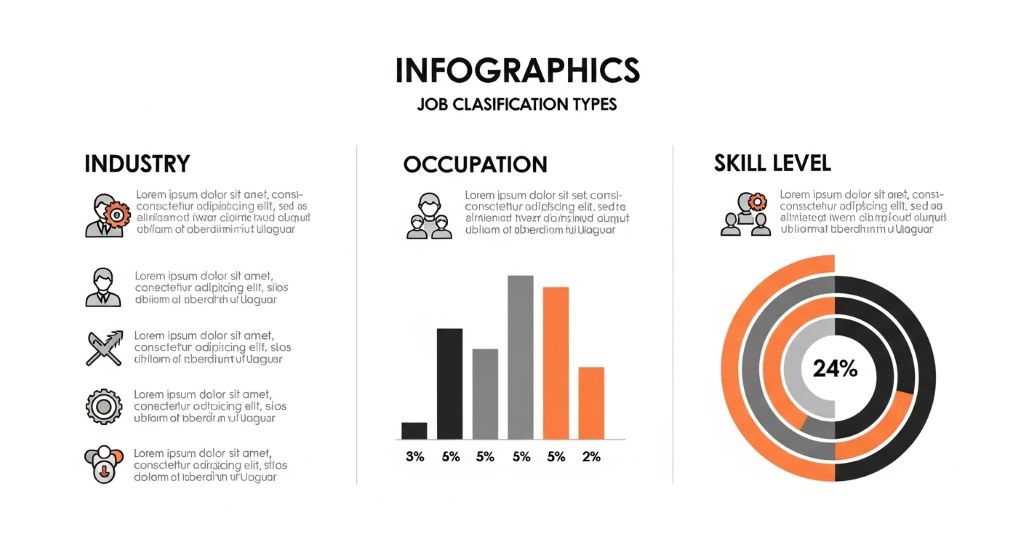
By Industry
Industry-based classification groups jobs by the sector they belong to. Common industries include healthcare, technology, finance, education, manufacturing, and retail. Each industry has its own culture, demands, and career ladders.
If you enjoy science and helping people, healthcare might be a good fit. If you are drawn to problem-solving and innovation, technology could be the right sector for you. Knowing the industry that excites you is often the first step toward finding the right role.
By Occupation
Occupational classification goes deeper than industry. It focuses on the type of work you actually do. For instance, within the healthcare industry, you might be a nurse, a doctor, a lab technician, or a hospital administrator. Each role is a separate occupation with its own skills and requirements.
Understanding your preferred occupation helps you identify the right training programs, certifications, and degree paths to pursue.
By Skill Level
Many classification systems also sort jobs by the level of skill or education required. Jobs are often divided into categories such as entry-level, semi-skilled, skilled, and professional or managerial roles.
This is important because it sets realistic expectations. An entry-level role might require only a high school diploma, while a professional role might need a bachelor’s or master’s degree. Knowing where you currently stand and where you want to go helps you plan your education accordingly.
By Employment Type
Jobs are also classified by how they are structured. Common types include full-time, part-time, freelance, contract, and self-employment. Additionally, some roles are remote while others require you to be on-site.
Your lifestyle and personal priorities should influence which employment type works best for you. Someone with young children might prioritize flexibility, while someone who thrives on structure might prefer a traditional full-time office role.
How to Read a Job Description Using Classification Knowledge
Once you understand the classification system, reading a job description becomes much easier. Here is a simple way to break it down.
Start by identifying the industry. The company’s name and description usually make this clear. Next, look at the job title and see what occupational category it falls into. This will help you compare it to similar roles elsewhere.
Then, pay attention to the required qualifications. These often hint at the skill level expected. Words like “entry-level” or “no experience required” point to beginner positions. Phrases like “5+ years of experience” or “advanced degree preferred” signal higher-level roles.
Finally, look at the responsibilities listed. These give you a clear picture of your day-to-day work life. Match these against your current skills and interests to decide if the role is a good fit.
Tools and Resources for Exploring Career Paths
There are many tools available to help you explore job classifications and find the right career path. Here are some worth exploring:
- O*NET OnLine: This free tool from the US Department of Labor lets you search occupations by skills, interests, and tasks. It is one of the most detailed job classification databases available.
- Bureau of Labor Statistics Occupational Outlook Handbook: This resource provides salary data, job outlook, and education requirements for hundreds of occupations.
- CareerOneStop: Sponsored by the US Department of Labor, this site offers career exploration tools, training finder resources, and job search assistance.
- LinkedIn Career Explorer: This tool shows how your current skills map to different job roles, making it useful for career changers.
- MyNextMove: Designed for people just starting out, this interactive tool helps you identify interests and match them to careers.
Using these tools regularly can help you stay informed about changes in the job market and discover new opportunities you may not have considered.
Matching Your Strengths to the Right Classification
Self-awareness is one of the most underrated career skills. Before you can decode the job market, you need to understand yourself. Think about what you are naturally good at, what energizes you, and what kind of environment helps you thrive.
One useful framework is the Holland Code, also known as RIASEC. This model classifies people into six personality types: Realistic, Investigative, Artistic, Social, Enterprising, and Conventional. Each type tends to do well in certain occupational categories.
For example, a person with a high Investigative score might thrive as a scientist, analyst, or researcher. Someone with a Social score might do well in education, counseling, or human resources. Knowing your type can point you toward job classifications that are naturally aligned with who you are.
However, personality is just one factor. Your education, life experience, and personal goals all play a role too. Therefore, try to look at the full picture when making career decisions.
Planning Your Education Around Job Classifications
Once you know the occupational category you want to enter, you can start planning your education with purpose. Different job classifications require different credentials. Some require a four-year degree, others need a vocational certificate, and some only require on-the-job training.
For instance, trades like plumbing, electrician work, and welding typically require apprenticeships or technical certifications. These programs are often shorter and more affordable than traditional college degrees. Moreover, they lead to stable, well-paying jobs with high demand.
On the other hand, fields like law, medicine, and engineering usually require years of higher education. If you are interested in these areas, it helps to start planning early and look for scholarships, internships, and mentorship programs.
Community colleges and online learning platforms have made it easier than ever to gain the skills needed for a wide range of job classifications. Platforms like Coursera, edX, and LinkedIn Learning offer courses that align with real-world occupational needs.
Navigating Career Changes with Classification Knowledge
At some point, many people consider switching careers. This can feel scary. However, job classification knowledge makes the transition less daunting.
Start by identifying which of your current skills are transferable. For example, strong communication skills are valued in many different occupational categories. Project management experience can apply to fields ranging from construction to marketing.
Next, look at classifications that are adjacent to your current role. If you work in retail management and want to move into human resources, you already have relevant experience in scheduling, conflict resolution, and team leadership. These skills overlap with many HR roles.
Additionally, informational interviews are a great way to learn more about a target classification before making a move. Reaching out to people already working in that field can give you an insider perspective on what the job really involves.
The Role of Job Classifications in Salary Negotiation
Understanding job classifications can also help you negotiate a better salary. When you know the standard occupational category for your role, you can research the typical pay range for that classification.
Salary data is often tied directly to occupational codes. Websites like Glassdoor, Payscale, and the Bureau of Labor Statistics provide pay ranges broken down by job classification, location, and experience level. Going into a negotiation with this data gives you a strong, evidence-based position.
Furthermore, knowing whether your role is classified as entry-level, mid-level, or senior can help you advocate for a title change if your responsibilities exceed your current classification.
Conclusion
Decoding job classifications is a practical skill that can transform how you approach your career. By understanding how jobs are grouped by industry, occupation, skill level, and employment type, you gain a clearer view of the job market. This knowledge helps you choose the right education, find roles that match your strengths, navigate career changes, and negotiate fair pay.
The job market is always evolving. However, the underlying system of classifications gives you a stable framework to work from. Take advantage of the free tools and resources available, invest in self-awareness, and plan your path with intention.
Your career is one of the most significant parts of your life. With the right knowledge, you can approach it with clarity, purpose, and confidence.
Frequently Asked Questions
1. What is the purpose of job classifications?
Job classifications organize the labor market by grouping similar roles together based on duties, skills, and required qualifications. They help employers, job seekers, and researchers compare roles, set pay standards, and understand workforce trends.
2. How can I find out what classification my job falls under?
You can use tools like O*NET OnLine or the Bureau of Labor Statistics Occupational Outlook Handbook. Search for your job title, and these tools will show you the occupational code and category it belongs to.
3. Do job classifications affect my salary?
Yes. Salary data is often tied to occupational classifications. Knowing your classification helps you research fair pay ranges and negotiate more effectively with employers.
4. Can job classifications help me switch careers?
Absolutely. By comparing your current classification to a target one, you can identify transferable skills and understand what additional training or education you may need to make a successful transition.
5. Are job classifications the same in every country?
Not exactly. Different countries use different systems. The US uses the Standard Occupational Classification (SOC), while many countries use the International Standard Classification of Occupations (ISCO). However, there is significant overlap, making it easier to compare roles internationally.
Related Topics:
Career Mistakes to Avoid as a Beginner in California
Careers in Real Estate Investment Trusts: Is It a Smart Choice?