

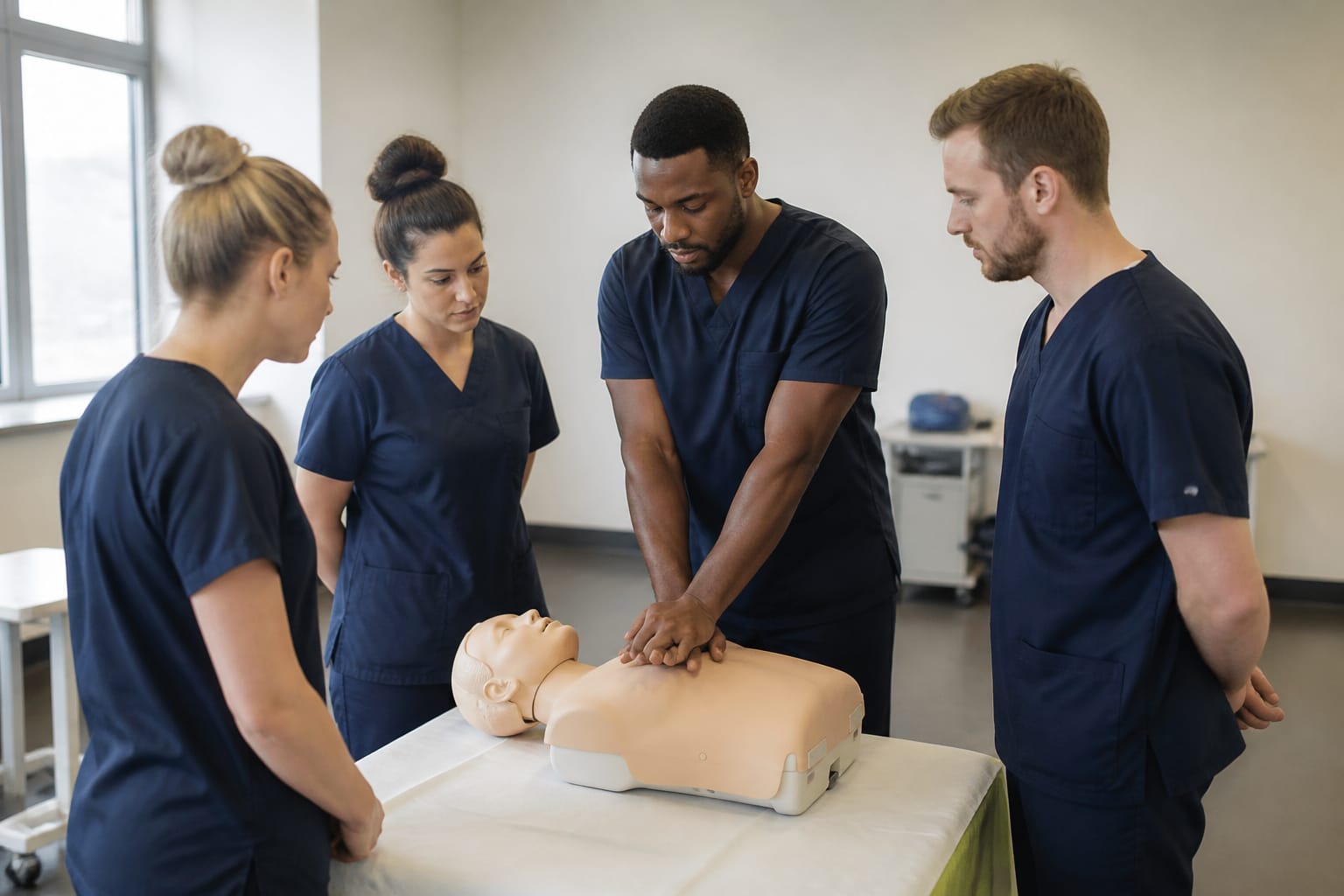
Clinical training for a team is more than just booking a single course and sending them on it. It needs to be set up with the staff member’s needs in mind and scheduled to be delivered at the right time to enable them to put the skills into practice shortly after. A way to set up a clinical training program for a team is outlined below.
Start With A Needs Analysis
Do a needs analysis. Use recent incident reports, audit results, feedback from staff’s last appraisal, and any near misses that have occurred. Also ask the team leads of your staff what skills their team members are lacking in terms of clinical knowledge. This can be done via a short survey or just a few questions to the team leads and they can give you some very honest feedback.
Separate Mandatory From Role-Specific Training
Distinguishing between the training that is mandatory for all team members and the training that is specific to individual roles is crucial. While Basic Life Support (BLS) and Manual Handling are required for all team members, the use of a defibrillator, wound care and the administration of medication by injection are specific to certain roles. A simple grid outlining who requires what will enable you to organise and manage training effectively and ensure that the training is relevant to each team member’s role. This will also aid budgeting as you will be able to ascertain how many places you need to book for each course.
Choose The Right Format For Each Skill
There are some skills that can only be taught in face-to-face training sessions with practical hands-on practice in order to gain skills in using equipment such as the defibrillator or learning wound care skills and administering injections. These need to be delivered in face-to-face training sessions with feedback from the trainer. Knowledge-based skills such as understanding an organisation’s infection control policy or the methods for recording information on patient’s records can be delivered as online training.
Build The Schedule Around Your Rota
Rather than pulling the whole team off for one massive training session, space out the Clinical Training Courses and have small groups attend each course. Check the team’s shift patterns before booking a course to make sure they have been scheduled adequately for the days of the training. Instead of one massive training event, spreading out Clinical Training Courses throughout the year ensures that clinical skills of the team are up to date without overloading the wards/t Kabul teams with massive numbers of absent staff on any one day.
Set A Realistic Budget Including Cover
Budget for clinical training need to include the cost of cover for the courses booked for individual team members, and also for travel to and from training locations (if held off site of the participants’ normal place of work). Budgeting a per-head amount for training to include these ‘hidden’ costs allows for realistic forecasting, e.g. allowing for a small amount per employee, throughout the year, rather than risking an overspend halfway through the year after having allocated an inadequate sum.
Track Certificate Dates Centrally
It’s relatively easy to set up a spreadsheet or HR system to track the certification dates of all your team members’ clinical training. Then, set up reminders to book the refreshers a month or so before the certificate is due to expire. The Resuscitation Council UK provide guidance on the frequency of training for life support skills, which can be used as a basis for setting up the reminder dates for the various courses. This will mean that you have a defensible reason for the timing of any refresher training that is required.
Build In A Competency Check, Not Just Attendance
A certificate is issued to confirm a participant has attended the Clinical Training Course, however, attendance does not necessarily confirm a participant has gained sufficient understanding and practical skills to apply clinical skills within clinical environments. In some cases, the clinical training requirements for doctors already include formal competency assessment, so it is possible for a team training programme to adopt the same approach for staff members in non-medical roles. A sign-off of practical skills within the Clinical Training Course such as observing a resuscitation scenario or practical application of a skill on the ward with the team leader/supervisor would suffice.
Review The Whole Programme Every Year
Once the training program is up and running, it is best to review this annually to consider the incident reports, audit results and new clinical guidelines that have emerged during the year. National programs for clinical training have changed focus in the past as the requirements of the workforce have changed. Your local training program should be equally as flexible.
While planning the team’s clinical training may require a bit more in advance of the usual once a year booking of a course for a team, it has the huge advantage of keeping all the team members’ skills up to date, keeping the odd occasion when all are needed for clinical work on the floor covered and provides irrefutable evidence of having prepared the team in good time to face any unexpected clinical incidents.